

ABOUT US
MESSAGE FROM ECCJ CHAIRMAN FUJI
Based on the lessons learned from the Fukushima nuclear power plant accident following the Great East Japan Earthquake, Japan’s energy policy is now focused on “S + 3E”, which refers to ensuring safety, energy supply, economic efficiency and environmental conservation.
Additionally, with regard to environmental issues, from the standpoint of preventing global warming the involvement of all countries in limiting and reducing greenhouse gases has become an urgent issue. In order to respond to this situation, there is a need for both the realization of a new “energy mix” through the active introduction of renewable energy and the promotion of “thorough energy conservation.”
Furthermore, from the point of view of international contributions, it is critical that we continue to take advantage of and spread our country’s world-leading energy conservation technology and the high-level policy and institutional concept that have earned an outstanding international reputation.
For this reason, as a professional organization that has promoted energy conservation for over 35 years, ECCJ aims to strengthen its future activities while increasing its sensitivity to the myriad needs surrounding the issue of energy conservation.
Specifically, with an emphasis on topics such as the dissemination of valuable information relating to energy saving efforts, the development of a wide range of energy saving human resources and cooperation in energy saving policies, we will continue to actively support energy conservation in industry, business and homes.
Through these activities it will be possible to further improve our country’s energy conservation technology and knowledge, already at the top level of world standards, taking maximum advantage of these technologies through international cooperation and international business exchange opportunities.
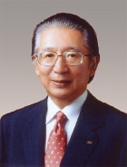
Yosaku Fuji
Chairman of the Energy Conservation Center, Japan
BACKGROUND
Having faced two oil crises, Japan has taken steps to improve energy efficiency in both the public and private sectors and now boasts the highest level of energy efficiency in the world.
In addition to developing technology in the private sector for dramatic and thorough energy management, Japan’s introduction of the Top Runner Program, based on the Energy Conservation Law concerning the rationalizing of energy usage, has accelerated the development and introduction of energy conservation technology. Other initiatives such as “smart community” demostration projects are helping to realize energy conservation at the city level. Furthermore, in developing countries, particularly within Asia, Japan has played an active role in integrating the public and private sectors in developing human resources focused on energy conservation and institution-building based on its experience in these areas.
ORGANIZATION PROFILE
Head office
2-11-5 Shibaura, Minato-ku, Tokyo 108-0023 Japan view map
Branch offices
8 locations in Japan
Founded
October 16, 1978
Capital
475 million yen
Operating funds
1.2 billion yen
Employees
88 (as of 1st July, 2019)
Supporting members
2,592
PROGRESS OF ENERGY CONSERVATION IN JAPAN
1951
• Enforcement of the Heat Management Act
1960
• Change of energy policy from coal to oil
1978
• Establishment of the Energy Conservation Center, Japan
1979
• Enforcement of the Act on the Rational Use of Energy (the ECA) • The second oil shock
1988
• The 1st Intergovernmental Panel on Climate Change (IPCC) held in Geneva
1997
• The 3rd Conference of Parties (COP3) held in Kyoto
Adoption of the Kyoto Protocol, Public commitment to reduce greenhouse gases by 6% (Japan)
1998
• Enforcement of the Act on Promotion of Global Warming Countermeasures
1999
• Establishment of the system for designating Type 2 Designated Energy Management Factories
Introduction of the Top Runner Standard (enforcement of the Revised ECA)
2000
• Introduction of the energy saving labeling system (JIS standard)
2002
• Ratification of the Kyoto Protocol (Japan)
• Enforcement of the Basic Act on Energy Policy
2003
• Enhancement of the measures for office buildings, etc. (Revised ECA)
2005
• Effectuation of the Kyoto Protocol
2006
• Establishment of the measures for transportation and the integrated control of heat and electricity (enforcement of the Revised ECA)
2008
• Start of the 1st commitment period of the Kyoto Protocol
• Summit (G8) held in Toyako, Hokkaido
2009
• At the United Nations Summit on Climate Change, the target aiming at 25% reduction of greenhouse gas emission was announced.
2010
• Introduction of the system for regulating the energy use as a whole enterprise (Revised ECA)
2011
• Due to Great East Japan Earthquake, electricity use in summer is limited, electricity saving measures are promoted
2011
• Establishment of Center for Energy Management System Auditors Registration (CEMSAR)
2014
• Announcement of the commitment to SE4ALL (Sustainable Energy for All) activities
FLAGSHIP PROGRAMMES
AEEC (Provisional)
Se4All